
English
- English
- Español
- SaudiArabia
News

Let's quickly understand the naming of optical cables: "A-Z"
2025-06-07 16:14:56
Click:
“
The meaning of the letters of the optical cable model is analyzed, and the optic
”
When we cannot clearly understand the meaning of these 'A-Z letters' of optical cables, we cannot accurately understand the actual use of optical cables, so we need to understand the meaning of each letter in the Chinese optical cable model. This is a highly technical professional issue. Follow HULUE and let us become technicians in related fields.
We hope that all buyers can obtain more systematic and complete information. This allows us to refer to quick reference information directly.
The optical cable model is divided into five parts: category, reinforcement, structural characteristics, sheath and outer sheath (refer to YD/T908-2000 standard).
The table will include the following categories: first letter (classification), second digit (reinforcement), third digit (structural characteristics), fourth digit (sheath), fifth digit (characteristics) and sixth digit (outer sheath). For each letter, the specific meaning and technical description of its representative will be given.
In the example section, four typical optical cable models, GYTA, GYTS, GJFJBZY and ADSS, are prepared for analysis. Each example will break down the meaning of the letters and explain the characteristics and applicable scenarios of the optical cable. Finally, the identification techniques of letter combinations will be summarized to help users master the ability to independently interpret optical cable models.
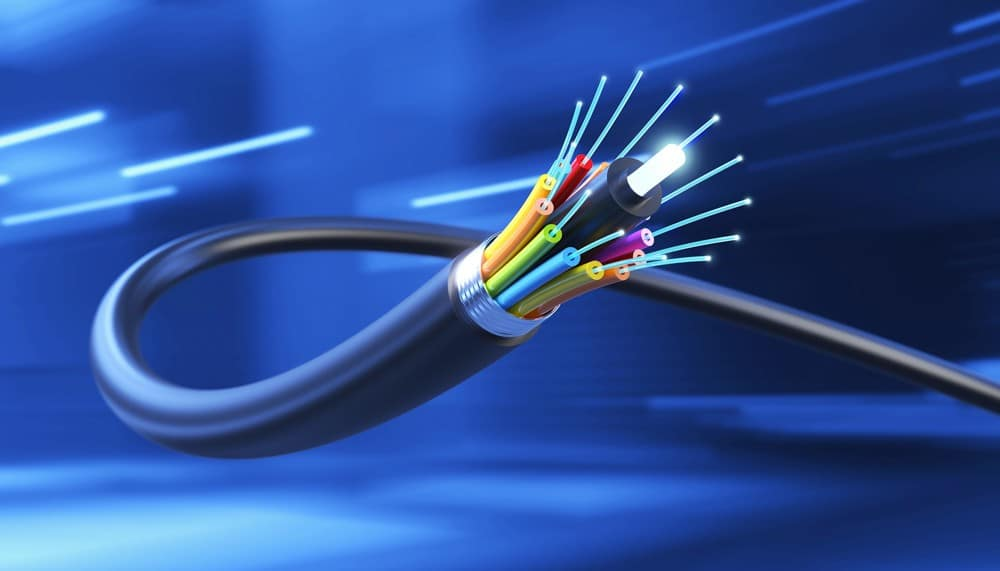
Here is the professional English translation of the Chinese optical cable classification system based on industry standards (YD/T 908-2020 and GB/T 7424.1), with terminology aligned with IEC/ITU conventions:
Optical Cable Model Designation: Letter Meaning Reference Table
Letter | Position | Meaning | Technical Specification |
GY | Prefix (Type) | Outdoor Telecommunication Cable | Metallic strength member dominant; for duct, direct burial environments |
GJ | Prefix (Type) | Indoor Telecommunication Cable | Non-metallic strength member; flame-retardant design |
MG | Prefix (Type) | Mining Cable | Explosion-proof, flame-retardant; hazardous environments (e.g., mines) |
F | 2nd (Strength) | Non-metallic Strength Member | Aramid yarn or fiberglass reinforcement (e.g., in GJFJBZY) |
(Omitted) | 2nd (Strength) | Metallic Strength Member | Steel wire (default; implied in GYTA) |
D | 3rd (Structure) | Ribbon Fiber Structure | High fiber count density (e.g., GYDTA) |
J | 3rd (Structure) | Tight-Buffered Fiber Structure | Tight coating over fiber (e.g., GJFJBZY) |
S | 3rd (Structure) | Loose-Tube Stranded Structure | Fibers in loose tubes (e.g., GYTS) |
X | 3rd (Structure) | Central Tube Structure | Fibers in central loose tube |
B | 3rd (Structure) | Flat Shape | Space-saving, wall-mountable (e.g., GJFJBZY) |
Z | 3rd (Structure) | Flame-Retardant Structure | Flame-retardant sheathing (e.g., GJFJBZY) |
A | 4th (Sheath) | Aluminum-Polyethylene Bonded Sheath | Moisture/rodent protection (e.g., GYTA) |
S | 4th (Sheath) | Steel-Polyethylene Bonded Sheath | Armored (e.g., GYTS; crush/tension-resistant) |
Y | 4th (Sheath) | Polyethylene (PE) Sheath | Standard outdoor sheath |
V | 4th (Sheath) | Polyvinyl Chloride (PVC) Sheath | Indoor flame-retardant sheath (e.g., GJVV) |
W | 5th (Property) | Low-Smoke Zero-Halogen (LSZH) | Low toxicity/smoke emission when burned |
53 | 6th (Armor) | Corrugated Steel Tape Armor | Enhanced crush resistance (e.g., GYTA53) |
33 | 6th (Armor) | Fine Steel Wire Armor | For direct burial/aquatic environments |
Note: Designation follows fixed sequence: Type → Strength Member → Structure → Sheath → Property → Armor.
Optical Cable Model Decoding Examples
1. GYTA
- GY: Outdoor cable
- (Omitted): Metallic strength member (implied)
- T: Filling compound (water-blocking)
- A: Aluminum-PE laminated sheath
- Application: Outdoor duct installation;moisture/rodent resistant.
2. GYTS
- GY: Outdoor cable
- (Omitted): Metallic strength member
- T: Filling compound
- S: Steel-PE bonded sheath (armored)
- Application: Direct burial/subaqueous; highmechanical protection.
3. GJFJBZY
- GJ: Indoor cable
- F: Non-metallic strength member (aramid)
- J: Tight-buffered fiber
- B: Flat profile
- Z: Flame-retardant
- Y: Polyolefin sheath
- Application: Riser/horizontal buildingcabling; space-efficient & flame-retardant.
4. ADSS
- Non-standard: All-Dielectric Self-Supportingcable
- Feature: Metal-free, self-supporting; deployedon power transmission towers.
Cable Type Identification Guide
1. Prefix = Application:
o GY→ Outdoor, GJ→ Indoor, MG→ Mining.
2. Structure = Core Design:
o T (filled) = outdoor; J (tight-buffered)/B (flat) = indoor.
3. Sheath = Protection Level:
o A (Al-PE) = moisture barrier, S (Steel-PE) = armored, V (PVC) = flame-retardant.
4. Armor Suffix = Mechanical Reinforcement:
o 53 (corrugated steel) / 33 (steel wire) = harsh environments.
This standardized nomenclature enables precise technical communication for optical cable selection, ensuring compliance with installation environments (outdoor/indoor/hazardous) and performance requirements (flame-retardancy/armoring/moisture resistance). Here is a structured name that explains the meaning of each letter in Chinese fiber optic cable codes, with examples to help quickly identify cable types.









