
English
- English
- Español
- SaudiArabia
News

What are OFNP, OFNR and LSZH?
2025-05-08 15:02:53
Click:
“
Optical cable jacket materials OFNP, OFNR and LSZH1. Material definition and com
”
Optical cable jacket materials OFNP, OFNR and LSZH
1. Material definition and composition
OFNP (Optical Fiber Nonconductive Plenum): It can be translated into Chinese as 'Optical Fiber Nonconductive Exhaust Duct Grade'. OFNP is the outer sheath material of optical cables used in air circulation spaces in buildings (such as ceiling mezzanines, ventilation ducts, etc.). It requires the highest flame retardant rating (UL 910/NFPA 262). Under the blowing of a forced fan, the flame spreads and extinguishes itself within 5 meters, and no toxic corrosive gas is produced. OFNP sheaths are usually made of thermoplastic polymers with excellent fire resistance (such as fluorinated PVDF or low-smoke halogen-free materials). The material does not contain metal components and has a non-conductive structure.
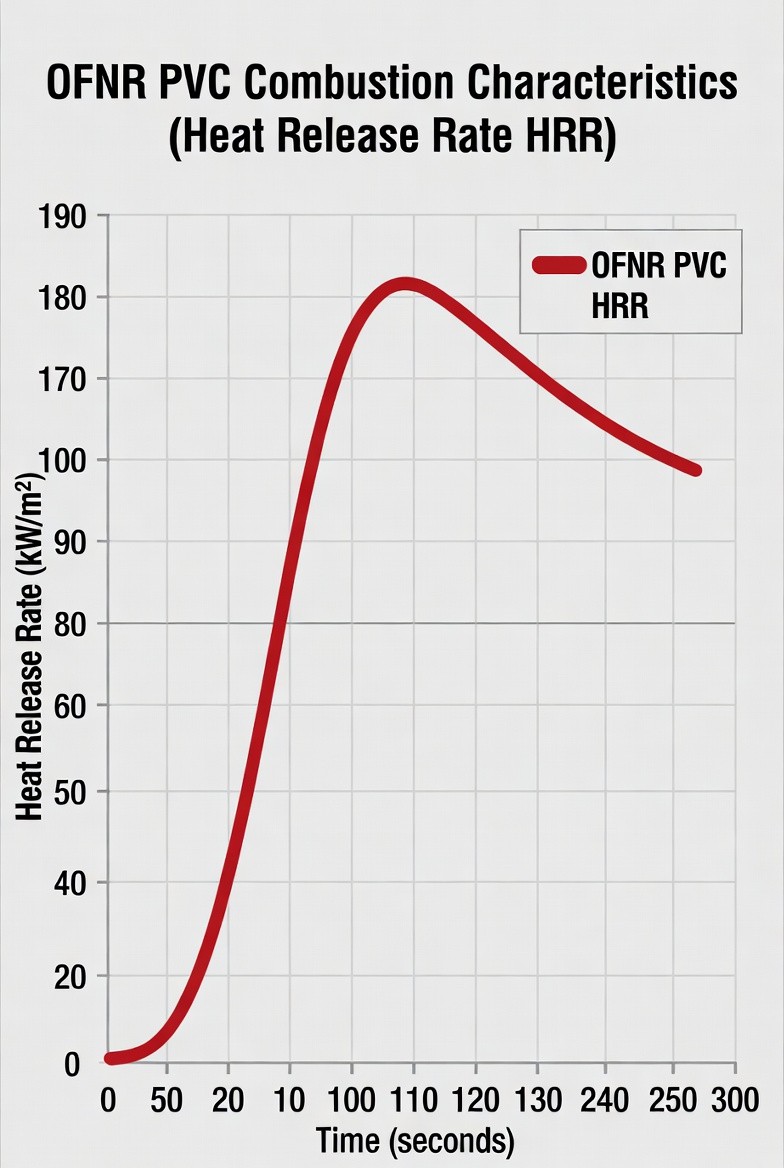
OFNR (Optical Fiber Nonconductive Riser): It is 'Optical Fiber Nonconductive Riser Grade', which is used in vertical shafts or risers between floors. Its flame retardant rating is lower than OFNP (UL 1666 vertical burning test grade), and it also requires that the flame be extinguished within 5 meters. OFNR sheaths are usually made of flame-retardant PVC (polyvinyl chloride) and other materials. They are slightly softer than OFNP, but their fire resistance is sufficient to block the fire on the floor. It is pointed out that OFNR/OFNP are both 'non-conductive' materials, that is, they do not contain conductive components.
LSZH (Low Smoke Zero Halogen): Chinese name is 'low smoke zero halogen' sheath material, which is a type of polymer composite material that does not contain halogen (chlorine, fluorine, etc.). Its characteristics are extremely low smoke emission during combustion and no corrosive hydrohalic acid gas is produced. LSZH materials are usually made of halogen-free thermoplastic or thermosetting plastics (such as halogen-free polyethylene, polyamide or cross-linked polyolefin) with a high content of inorganic flame retardant fillers (such as alumina hydroxide ATH). These fillers absorb heat and decompose during combustion, suppress flames and form a barrier carbonization layer, thereby reducing the generation of toxic gases and smoke. The flexibility of LSZH sheaths is between PVC and special polymers, but overall it is harder than ordinary PVC materials.
 |  |  |
2. Features and Benefits
Flame retardant performance: OFNP has the highest flame retardant rating (duct grade) and is suitable for air circulation spaces to effectively prevent the spread of flames. OFNR meets the requirements of the riser grade and is used in vertical shafts between floors to prevent the spread of large-scale fires. LSZH is inherently flame retardant (usually meets the IEC 60332 series of tests) and self-extinguishes when burned. Although its flame retardant rating is slightly lower than that of OFNP, it is sufficient to meet the fire protection requirements for cables in general buildings.
Smoke and toxicity: LSZH materials produce almost no smoke when burned, are halogen-free, and do not generate corrosive gases (such as hydrogen chloride); therefore, they are extremely beneficial to the safety of personnel and equipment in fires. OFNP sheaths also produce very little toxic smoke in fire situations. In contrast, traditional PVC (usually used as ordinary OFNR sheaths) produces a large amount of black smoke and hydrochloric acid when burned, which is more harmful to humans and electronic equipment.
Environmental safety: LSZH is an environmentally friendly material that does not contain halogens and meets multiple environmental standards. If halogen-free or fluorinated materials are used in OFNP/OFNR, low toxicity requirements can also be achieved. All three are non-conductive designs without metal core wires, which can avoid electrical short circuits and interference problems.
Other characteristics: In terms of flexibility, OFNP sheaths using fluoropolymers (such as PVDF) have good flexibility and mechanical strength. LSZH sheaths are relatively hard and costly, but can significantly improve escape safety in crowded places (such as subways, airplanes, etc.). OFNR (PVC) has the lowest cost and can be used for general floor wiring while taking into account economy.

3. Common application scenarios
Data center: The ceiling mezzanine and the air duct of the data center belong to the duct space, and OFNP-grade optical cables are required to meet the NFPA 262/UL 910 grade requirements; OFNR can be used for vertical wiring between floors; low-smoke sheaths (LSZH or flame-retardant PVC) can also be used for general horizontal wiring to ensure minimum smoke in case of fire.
Railway transportation: Subway train carriages, tunnels and platforms have poor ventilation conditions and dense crowds, and LSZH optical cables are preferred. Their low smoke and low toxicity characteristics can protect evacuation safety. OFNR sheaths can be used for wiring in train machine rooms and station shafts to meet fire resistance and economic requirements.
Medical institutions: LSZH or OFNP sheaths should be used as much as possible for cable laying in hospitals to reduce the release of harmful gases in case of fire and protect the safety of patients and medical staff.
Office buildings: In general office buildings, OFNP sheaths are used in ceiling ventilation areas; OFNR sheaths are used in vertical shafts and trunk lines between floors; lower-cost LSZH or flame-retardant materials can be used in ordinary work areas.
Communication shafts and shafts: OFNR sheaths are used for vertical wiring in internal shafts with large spans; OFNP sheaths should be used for ventilation ducts and return air ducts on each floor.
Others: LSZH materials are almost all used in special environments such as aviation, ships, and subways; OFNP-grade optical cables are also strictly required in the cold channel (Airflow Plenum) of the data center.
4. Performance comparison
Fire resistance: OFNP is the best (meets the highest level requirements of UL 910); OFNR is second (meets the UL 1666 riser test); LSZH is general grade (needs to pass IEC 60332 and other tests, but no clear UL classification).
Smoke volume: LSZH is the lowest (low smoke standard); OFNP is low smoke (UL910 requirements); OFNR does not require smoke control, and there is more smoke when burning.
Toxicity and corrosiveness: LSZH materials are halogen-free and low-toxic when burning; OFNP belongs to the low-toxicity grade; PVC/OFNR releases hydrochloric acid and various toxic gases when burning.
Flexibility: OFNP (if using fluoropolymer) has good softness; PVC/OFNR has moderate flexibility; LSZH sheaths are generally harder and slightly more laborious to construct.
Cost: OFNP and LSZH are expensive materials, and their prices are significantly higher than OFNR (PVC); OFNR has the lowest cost.
Environmental safety: LSZH is the most environmentally friendly (halogen-free and non-corrosive), and OFNP is second in environmental performance; PVC contains halogen and is not environmentally friendly
5. Related certifications and standards
UL 910 (NFPA 262): US (and CSA equivalent) pipe-level flame longitudinal burning test, which specifies the combustion spread and smoke density indicators of optical cables under horizontal placement and wind speed conditions; only OFNP-level cables can pass this test and are used in aviation ducts or ceiling ventilation spaces.
UL 1666: US riser-level flame height test, which simulates the burning conditions in vertical shafts; OFNR-level optical cables must pass this test and are often used in vertical shafts between floors.
IEC 60332 series: International Electrotechnical Commission standards for determining the longitudinal burning characteristics of single (60332-1) or multiple (60332-3) cables. LSZH and OFNR, etc. must meet the corresponding levels (such as 60332-3 Cat. C).
IEC 60754: Determine the amount and acidity of halogen acid gas produced when the cable burns; LSZH materials are required to meet low halogen standards, that is, to meet extremely low HCl and other emissions to ensure environmental safety.
IEC 61034: Determine the smoke density produced by the cable when it burns; the '3m³ enclosed smoke test' ensures that the cable produces as little smoke as possible in a fire, which helps personnel evacuation and fire safety.
Other related standards: UL 1581, UL 1685, CSA FT6/FT4, etc., national standards GB/T 17650 (equivalent to IEC 60754), GB/T 17651 (equivalent to IEC 61034), etc. These standards constitute the test requirements for fire protection and safety of optical cables.
6. Selection Recommendations
Ceiling ventilation area or air conditioning return duct: OFNP sheathed optical cable is preferred. OFNP-grade cables meet the highest fire protection level and have strict control over smoke toxicity.
Vertical shafts and equipment shafts between floors: OFNR sheaths are recommended for vertical trunk wiring to prevent the spread of fire between floors.
Places with dense personnel or poor ventilation: such as subway platforms, computer rooms, hospitals, etc., LSZH sheaths are recommended. Its low smoke and low toxicity characteristics can greatly reduce the harm to personnel in the event of a fire.
General horizontal wiring: If it is not in a duct environment, OFNR or LSZH sheaths can be selected to balance cost and safety; flame-retardant PVC (under an environment lower than OFNP requirements) can be used for economical applications.
Comprehensive considerations: The final selection should comply with local regulations (such as NEC, TIA/EIA, GB standards, etc.) and project safety requirements. OFNP must be used in spaces that require advanced fire protection, and OFNR or LSZH can be selected as appropriate in general construction wiring.
Conclusion:
OFNP, OFNR and LSZH materials have their own focuses. The optical cable sheath should be reasonably selected according to the specific building structure, population density and ventilation conditions, combined with standard requirements, to balance fire safety and cost-effectiveness. This is of great significance to communication engineers, purchasers and system integrators when designing cabling systems.









